Why Buying Apartments in Dubai’s Emerging Areas Could Be a Smart Investment
Looking at Dubai’s past to identify tomorrow’s real estate opportunities
Many property investors make their decisions based primarily on the current condition of a location. They look at how popular an area is today, what facilities it offers, how close it is to the city centre, and whether there is already strong demand for buying and renting properties.
But are these factors enough to make a successful long-term investment?
I believe that identifying genuine opportunities in Dubai’s real estate market requires more than understanding today’s market conditions. Investors should also study the history of the city’s development and, more importantly, understand its future direction.
Sometimes, areas that currently appear distant from the city centre, underdeveloped or even surrounded by desert can eventually become important residential, commercial and economic destinations.
Dubai’s own development history provides some interesting examples.
Looking Back: Dubai in 2002 and 2003
If we go back to 2002 and 2003, we can see that Dubai’s real estate market was still at an early stage of its transformation into an international investment destination.
In 2002, Dubai took a significant step towards allowing foreign nationals to own freehold properties in designated areas. This decision marked an important turning point in the history of Dubai’s property market and helped create opportunities for international investors.
In 2006, Dubai introduced a clearer legal framework for property registration through its real estate registration law.
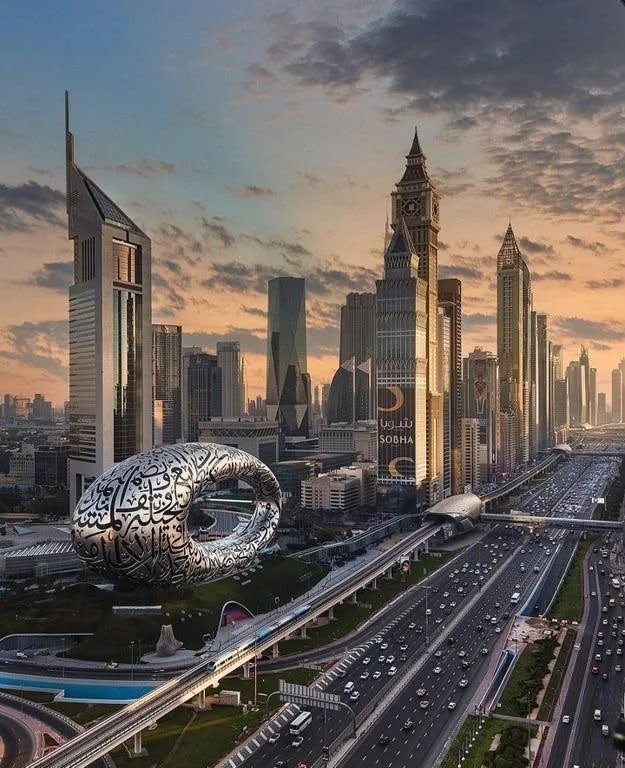
Following these developments, major projects such as Palm Jumeirah, Burj Al Arab, Burj Khalifa and several new urban communities gradually transformed the city’s landscape.
However, an interesting point is that not everyone believed in the future of these emerging locations when their development first began.
Could Investors Back Then Imagine the Future of Downtown Dubai and Business Bay?
Let’s go back in time.
During the early 2000s, areas such as Deira, Al Karama and other established parts of Dubai were among the city’s most familiar residential and commercial destinations.
Under those circumstances, it was not easy for everyone to imagine that areas such as Downtown Dubai and Business Bay would eventually become some of the city’s most important business, residential and lifestyle destinations.
An investor looking at these locations at the time might have considered them too far from the established parts of Dubai and preferred to invest in areas that already had better-known facilities and stronger demand.
But urban development does not always follow today’s map.
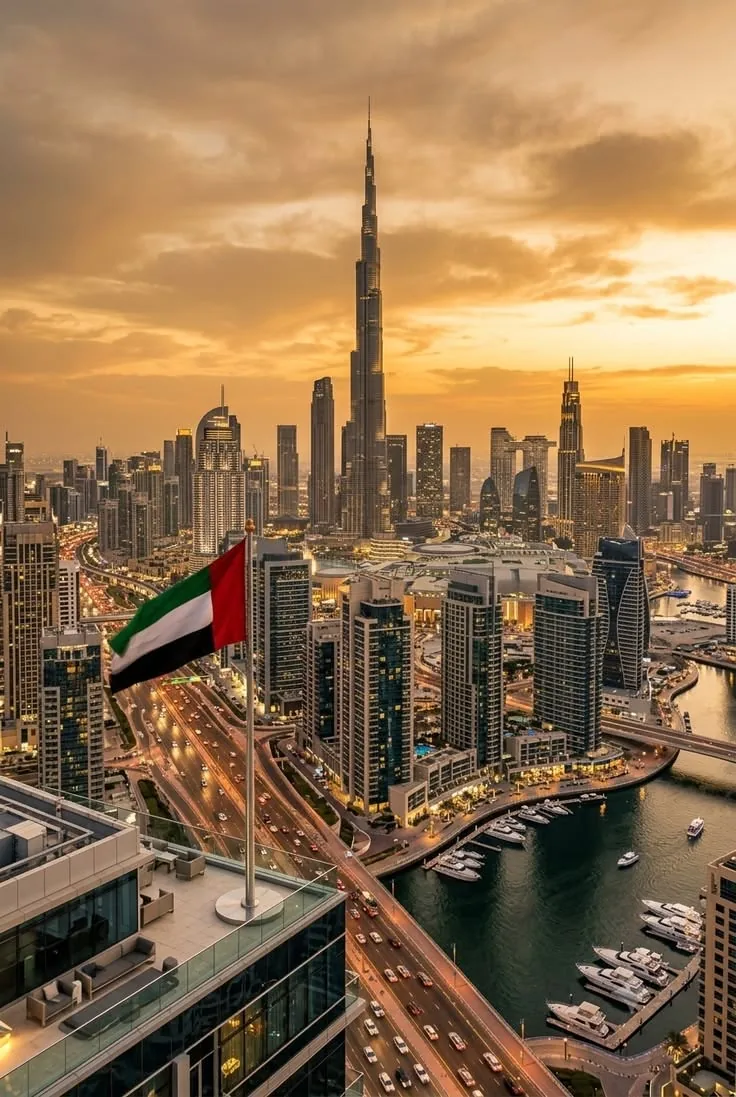
Construction of Burj Khalifa began in 2004, and the building officially opened on 4 January 2010. It was more than the construction of a skyscraper. It formed part of the creation of an entirely new urban centre and helped reshape Dubai’s international image.
Over time, Downtown Dubai and its surrounding districts became major destinations for residential living, tourism, business and investment.
What Can Dubai’s History Teach Today’s Property Investors?
There are other examples of this development pattern.
Palm Jumeirah, whose development began in 2001, was an ambitious project that many people could not fully appreciate in terms of its future potential at the beginning.
Similarly, communities such as Dubai Hills Estate and Emirates Hills demonstrate how a location can gradually develop a different position in the market through infrastructure, lifestyle facilities, accessibility and genuine residential demand.
The lesson is not that every new development will become successful or that every property purchased far from the city centre will generate strong returns.
The real lesson is that investors should evaluate a location based on its future development plans, infrastructure, strategic position and potential demand, rather than judging it solely by its current appearance.
Why Are Areas Such as Palm Jebel Ali, Dubai South, Dubai Islands and Dubailand Worth Evaluating?
Today, when discussing emerging real estate investment opportunities in Dubai, several locations deserve closer attention.
1. Palm Jebel Ali
Palm Jebel Ali is one of Dubai’s major waterfront development projects.
Its investment potential should not be assessed solely on its beachfront location. It should also be considered within the broader context of Dubai’s long-term coastal development, tourism strategy and urban expansion.
2. Dubai South
Dubai South is particularly important because of its connection to Dubai’s long-term plans for transportation, logistics, aviation and Al Maktoum International Airport.
It is not simply a residential development. It is part of a broader economic and logistics ecosystem.
3. Dubai Islands
Dubai Islands is another location worth evaluating due to its planned waterfront communities, residential developments, hospitality, tourism and leisure facilities.
For investors considering longer-term opportunities, understanding the progress of this master development is important.
4. Dubailand
Dubailand is a large development area comprising different residential communities and projects.
Evaluating this location requires a closer look at individual communities, accessibility, infrastructure, available facilities and the type of residential demand each area is likely to attract.
It is important to understand that these locations are not identical in terms of development stage, investment risk or expected investment horizon. Each must be assessed independently.
Does Every Undeveloped or Desert Area Represent an Investment Opportunity?
Absolutely not.
This is one of the most important points I want to emphasise when discussing real estate investment.
Just because an area is currently undeveloped does not mean it will necessarily experience significant growth in the future.
A proper investment assessment should consider several factors:
- Official urban development and infrastructure plans.
- Future road connections and public transportation.
- Proximity to employment centres and commercial destinations.
- Actual and projected residential supply and demand.
- The quality of project design and construction.
- The developer’s track record and reputation.
- Purchase prices compared with actual market values and comparable projects.
- Delivery timelines and the investor’s expected holding period.
For this reason, investing in an emerging location requires more detailed analysis than purchasing in an established community.
One Critical Factor: The Developer
Even when a location has an excellent long-term development outlook, choosing the wrong developer can significantly affect the investment outcome.
The developer’s delivery history, construction quality, financial position, project management, post-handover services and overall reputation should all be carefully evaluated.
In my opinion, choosing the right location without choosing the right developer is an incomplete investment decision.
My Personal Experience in Dubai’s Real Estate Market
I have been active in the real estate industry since 1381 in the Iranian calendar, equivalent to 2002–2003, and throughout these years I have experienced different market cycles, including periods of slowdown, strong growth and significant market changes.
One lesson has become particularly clear to me:
A successful investor is not necessarily someone who follows what everyone else is doing today. It is someone who can analyse the market, think independently and make an informed decision.
Property purchases should not be driven by market excitement, project advertising or the current popularity of a particular location.
Sometimes, an established area may no longer represent the best investment opportunity because its entry price is already too high.
On the other hand, an emerging location may also be a poor investment if it is overpriced, if infrastructure development is delayed or if there is excessive future supply.
Therefore, being close to the city centre does not automatically guarantee a successful investment. Equally, being far from the city centre does not automatically make a property an attractive opportunity.
What really matters is understanding the location, timing, development plans, potential demand and the quality of the developer.
Conclusion: Understand the Past to Evaluate the Future
If I could share one key message with property investors, it would be this:
Do not evaluate an investment opportunity solely by what you see today.
Dubai’s development history shows that some of today’s most important urban destinations were once considered distant or less significant locations.
However, this does not mean every new development will achieve the same success.
The difference between a professional investor and an emotional buyer lies in the ability to distinguish a genuine opportunity from a marketing promise.
In my upcoming articles, I will explore how to identify the right time to buy, which locations are suitable for different investment strategies, and how to evaluate the differences between established communities and emerging areas.
In my opinion, the best investment is not necessarily buying in today’s most popular location. It is identifying a location that, through careful analysis, has the potential to become more valuable and important in the future.
⸻
Written by a Dubai real estate professional.